Japan Digital Papers with Asian Patterns: A Creative Resource for Designers and Hobbyists
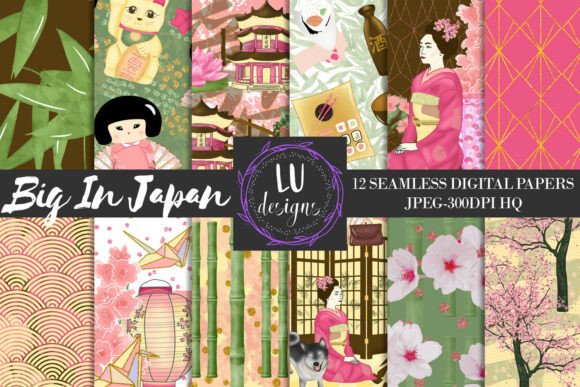
Japan Digital Papers featuring Asian Patterns are a versatile collection of 12 high-quality, seamless digital backgrounds designed to elevate your creative projects. Each paper is available in JPEG format at 300 DPI, ensuring crisp and clear prints on various surfaces. With dimensions of 3600px x 3600px (equivalent to 12” x 12”), these designs can be tiled seamlessly to create larger visuals without visible seams or disruptions.
Why Choose Japan Digital Papers?
These papers offer a unique blend of traditional Japanese aesthetics and modern design functionality. Whether you're creating planner supplies, stickers, dividers, envelopes, blog headers, cardmaking templates, scrapbooking layouts, logos, banners, stationery, wrapping paper, or even printing on fabric and mugs, the right background can make all the difference. Japan Digital Papers provide that extra touch of elegance and cultural richness that stands out in both personal and professional settings.
Common Mistakes When Using Japan Digital Papers
Many users, especially beginners, overlook key considerations when selecting and applying these patterns. Here are some common pitfalls and how to avoid them:
1. Ignoring Seamless Tiling Requirements
While the papers are labeled as seamless, not all designs tile perfectly when scaled or rotated. It’s essential to preview the pattern before using it in large formats. For example, if you’re tiling two 12”x12” papers side by side for a 24”x12” layout, ensure the edges align naturally without distortion.
Better Approach: Open the paper in an image editing tool like Photoshop or GIMP and zoom in to check the edges. Try duplicating the image and placing it next to the original to see if the pattern flows smoothly. This step helps avoid visual inconsistencies in final products.
2. Misusing Resolution Settings
Digital papers are often used for print purposes, so resolution matters. The provided 300 DPI ensures clarity, but if you resize the image improperly—especially enlarging it beyond its native size—you risk pixelation and loss of quality.
Better Approach: Always work with the original file size unless you need to scale down. If you must enlarge, consider using vector-based software or look for higher-resolution versions of the same pattern where available.
3. Overlooking Color Compatibility
Asian patterns come in a variety of color schemes, from muted pastels to bold traditional hues. Not all colors will complement every project. Choosing a paper with colors too similar to your foreground elements can result in a washed-out or confusing design.
Better Approach: Use online tools like Adobe Color to test the pattern against your text or images. Look for contrast and readability, especially if the paper will be used for content-heavy items like planners or educational materials.
4. Underestimating Licensing and Usage Rights
One major misunderstanding is assuming that because a paper is digital, it’s free to use however you want. In reality, many designers protect their work with copyright or usage restrictions. Using unauthorized digital papers can lead to legal complications or poor customer experiences if the product lacks commercial rights.
Better Approach: Always review the licensing information before downloading or purchasing. Ensure the papers allow the intended use, whether it's for personal crafts, commercial printing, or web design. Reputable marketplaces will clearly state the permitted uses.
Practical Uses Across Different Industries
Japan Digital Papers aren’t just for artists and crafters—they serve a wide range of industries and hobbies. Here’s how they can be applied effectively:
- Planner Supplies: Use these papers as background layers for weekly spreads, goal trackers, or habit calendars. They add visual interest while maintaining functionality.
- Cardmaking & Scrapbooking: These patterns bring a touch of sophistication to handmade cards and photo albums. Pair them with minimalist text for balance.
- Web Design & Blogging: Incorporate subtle Asian-patterned textures into headers, banners, or page dividers to enhance user experience and aesthetic appeal.
- Printing on Surfaces: From fabric to mugs, the seamless nature of these papers makes them ideal for repeatable, cohesive designs across multiple items.
Example: Creating a Planner Divider
Imagine designing a divider for a bullet journal. You choose a delicate cherry blossom pattern from the Japan Digital Papers collection. However, after printing, the text becomes difficult to read due to the busy background.
Mistake: Assuming the pattern is suitable for all types of text without testing it first.
Solution: Overlay a semi-transparent white box behind the text or select a version of the pattern with less density. Always test-print small sections before full production.
How to Make the Most of These Digital Papers
To maximize the value of Japan Digital Papers, consider the following tips:
- Layer Smartly: Use the papers as base layers rather than foregrounds. Add text, icons, or illustrations over them for better visibility and control.
- Customize Before Applying: Adjust brightness, contrast, or saturation in your design software to match the tone of your project. Sometimes a simple tweak can transform the pattern’s usability.
- Match Your Brand or Theme: If you're an entrepreneur or marketer, align the pattern with your brand identity. A well-chosen background reinforces your message and improves audience connection.
- Experiment with Tiling: Don’t be afraid to combine multiple tiles to cover larger areas. This is particularly effective for wrapping paper, wall art, or event banners.
What to Check Before Making a Decision
Before downloading or purchasing any set of Japan Digital Papers, take time to evaluate the following factors:
- File Format and Quality: Confirm that the files are in JPEG format and meet the 300 DPI standard for print. Lower resolution won’t cut it for physical applications.
- Dimensions and Scalability: Ensure the 12” x 12” size works for your needs. Some projects may require cropping or resizing, which should be done carefully.
- Pattern Density and Complexity: High-density patterns might overwhelm simpler designs. Choose a paper that complements rather than competes with your content.
- License Scope: Clarify whether the license allows for personal use only or includes commercial applications such as selling printed goods.
- Compatibility with Software: Make sure the paper works well with your design tools. Some older programs may not support high-DPI JPEGs properly.
Final Thoughts on Enhancing Creativity
Japan Digital Papers with Asian Patterns open up a world of creative possibilities for anyone looking to infuse their work with cultural depth and visual flair. By understanding the nuances of tiling, resolution, and licensing, you can avoid costly errors and produce professional-grade results. Whether you're a seasoned designer or just starting out, these papers can become a valuable part of your toolkit when used thoughtfully and intentionally.
Remember, the best designs are those that balance beauty with function. Take time to explore each pattern, experiment with overlays, and apply them in ways that truly enhance your project. With the right approach, Japan Digital Papers can help you stand out in a crowded creative landscape.